A Powerful Tool For Dental Health
Fluoride Treatments
Your child brushes her teeth twice a day, flosses regularly, and visits the dentist every six months. But did you know that rinsing with fluoride, a mineral that helps prevent cavities and tooth decay, also helps keep her teeth healthy and strong?

Why Fluoride is Essential

Fluoride is effective in preventing cavities and tooth decay by coating teeth and preventing plaque from building up and hardening on the tooth’s surface.
Fluoride comes in two varieties, systemic and topical:
- Systemic fluoride is ingested, usually through a public water supply or supplemental delivery. While teeth are forming under the gums, the fluoride strengthens tooth enamel, making it stronger and more resistant to cavities.
- Fluoride can also be applied topically to help prevent caries (cavities) on teeth present in the mouth. It is delivered through toothpaste, mouthwash, and professional applications like gels and varnishes. Professional application is also a valuable tool in cavity prevention.
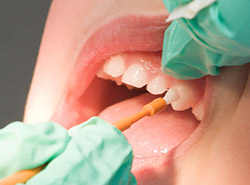
Receiving a fluoride treatment from your dentist
A fluoride treatment in the dentist’s office takes just a few minutes. After the treatment, patients may be asked to not rinse, eat, or drink for at least 30 minutes in order to allow the teeth to absorb it. Depending on your child’s oral health or your doctor’s recommendation, your child may be required to have a treatment every three, six, or 12 months. Your doctor may also prescribe at-home products such as mouthwash, gels, or antibacterial rinses.
How to choose the right treatment
When choosing an at-home fluoride product (such as toothpaste or mouthwash), always check for the American Dental Association’s (ADA) seal of acceptance. Products marked with the ADA seal of acceptance have been carefully examined and approved by the ADA based on safety and effectiveness.